We talk about prompt engineering for AI, but rarely for ourselves. Our minds run on internal narratives — stories about who we are, what we’re responsible for, and how the world works. Those stories are prompts. We can rewrite them.
The Uroboros loop
Anxiety is a recursive function with no exit condition. The Uroboros — a serpent eating its own tail — captures it: stories shape interpretation, interpretation shapes behaviour, behaviour creates experiences, experiences reinforce stories. A self-fulfilling prophecy engine running 24/7.
Two reframes that work
“Everyone here is my friend, they just don’t know it yet.” One line changes your body language from closed to open, your voice from guarded to warm. The world responds differently to someone who assumes goodwill.
The responsibility paradox. Thinking you’re responsible for everyone’s feelings is actually arrogant — it claims control over other people’s inner worlds. You don’t have it. Their disappointment might lead somewhere better; their struggle might be necessary growth. Be kind and considerate without the impossible burden of managing everyone’s emotional state.
Your control panel
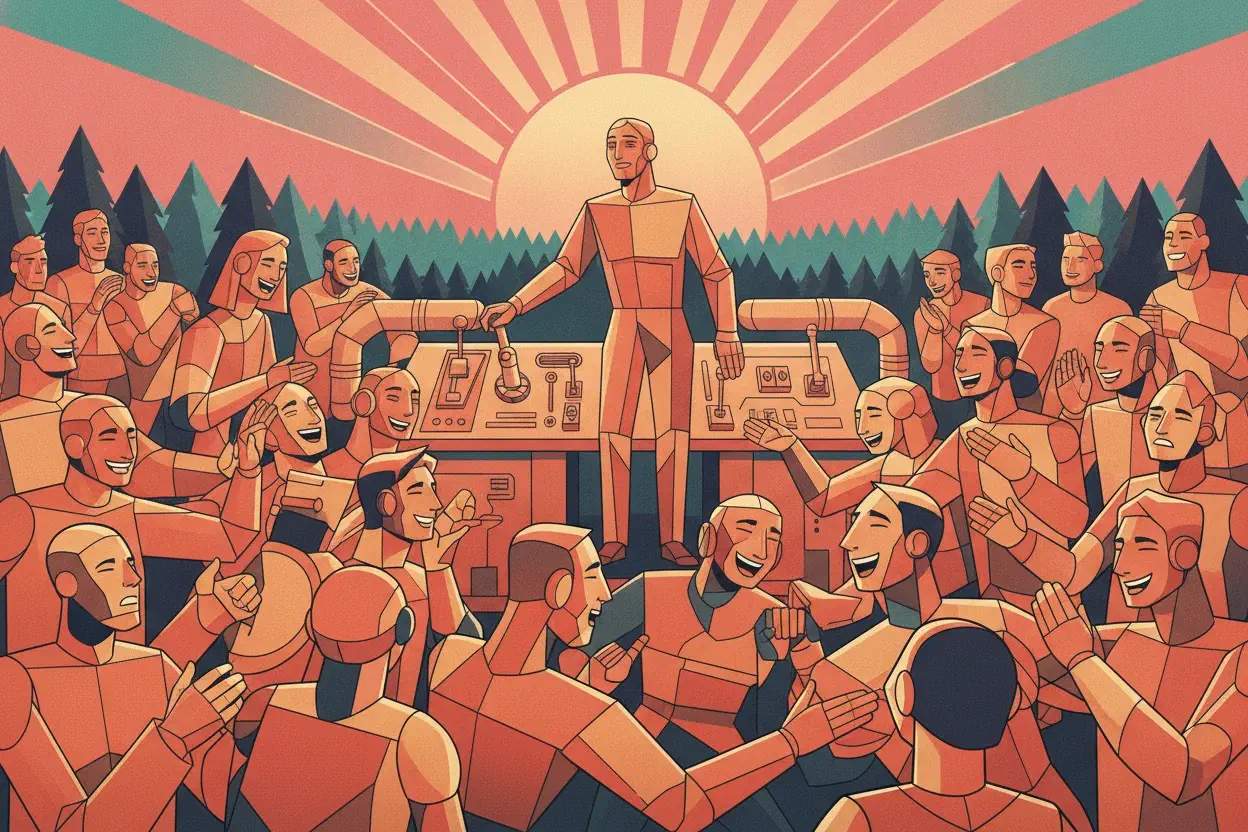
What you actually control: posture, breathing, voice tone, which thoughts get attention, which narrative you believe. Master those few levers and you start to awe yourself.
Daily prompts
Morning boot sequence: “I am the architect of my experience today. I choose my reactions, my focus, and my energy.”
Anxiety interrupt protocol: “This feeling is information, not instruction. I acknowledge it without obeying it.”
Evening commit message: “Today I authored my experience. Tomorrow I’ll write a better story.”
The prompts we give ourselves are the most important code we’ll ever write. Seen through this lens, philosophy and psychology aren’t soft subjects — they’re system design for the operator.
You are both the programmer and the program. What story will you compile today?